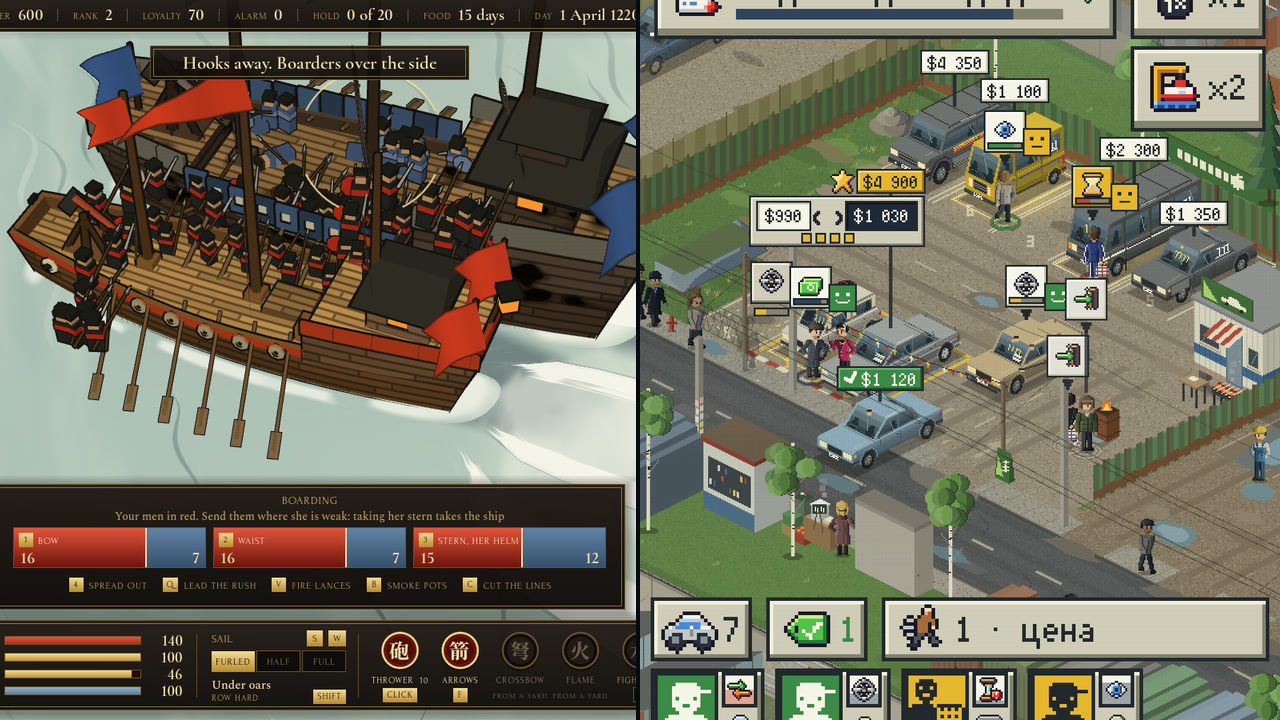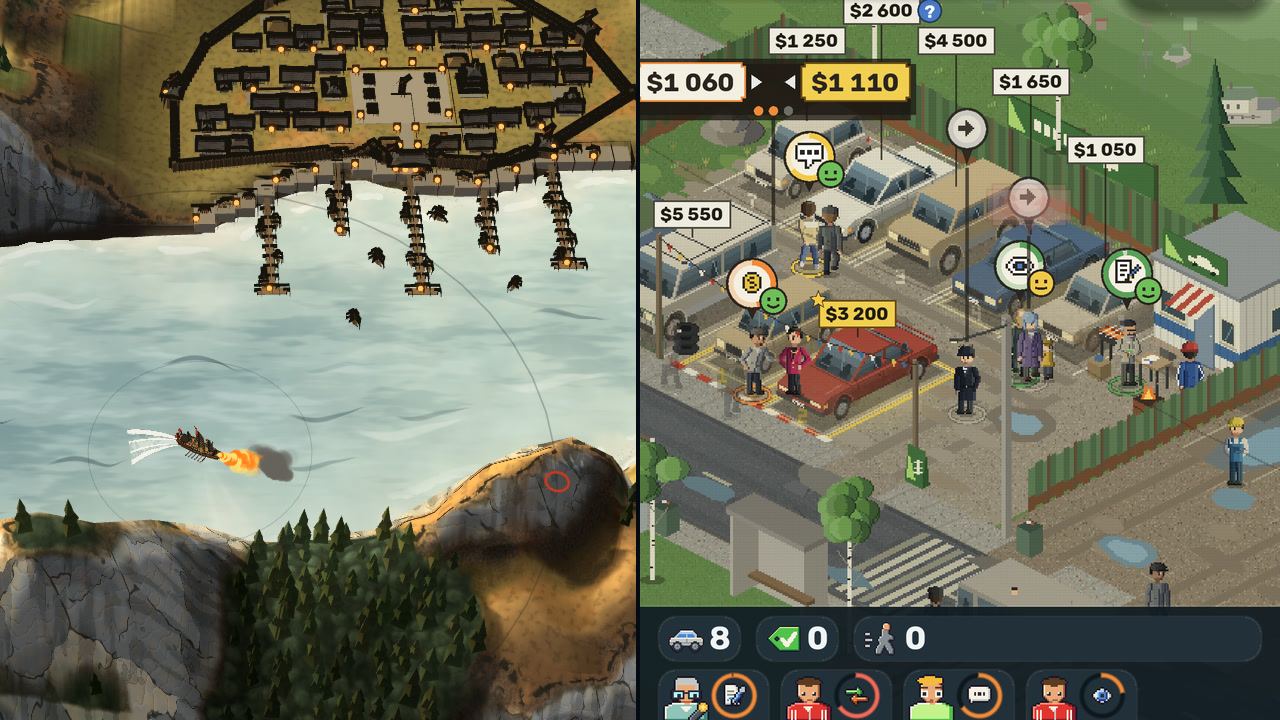
Yesterday’s devlog was about the new name and build 28. The browser build on itch.io has moved on since then: it is version 0.1.35 now. Here is what changed, and why.
The faults from last time
The last devlog ended with three faults from the first notes on build 28. All three are fixed. A tap on bare floor now picks the room, rooms have a chip of their own in the world and a Rooms page. A pharmacy joined to the hall loses the wall between them. The wide layout puts its panels at the side, at full height, instead of squashing them.
A limit that grows with the lab
Build 28 had a flat cap on stations: 18 in Vladivostok, 22 in San Francisco, however many rooms you had. We suggested softening it by making each station past the ninth earn a little less. That was turned down. Now the limit grows with the rooms you use for play: a standard room adds 5 stations, each of the two halls adds 6 and the old pharmacy adds 12, so the lab goes from 12 to 17 to 29. Bigger kinds of station take more floor, so space does the rest of the limiting.
Six kinds of station
Until now every station was the same standing pod. Now there are six kinds, and each has its own price, crowd, games, staff load and upgrade levels:
- Standing, the pod you already know.
- Room-scale, three tiles by three to walk around in.
- Seated, at a desk.
- Racing rig: a wheel clamped to a desk, then a seat frame, then a motion platform.
- Flight rig: a stick, then a cockpit, then a seat that moves on several axes.
- Treadmill: a slippery dish with a harness, then a belt, and late in the game a full running rig.
Sixteen new games came with them, tied to their kinds, so a racing game needs a rig. There are now 28 combos, collected in a combo book under Games. Some are about objects: a fan blowing in a racing driver’s face, a rig next to the big screen so people on the street stop and watch, spare parts on a shelf by the rigs. Some are about games side by side: two racing rigs make a race, four make a grid, two shooters make a duel. A pair only counts when the two games are different, so a varied line-up pays better than the same game copied across the hall.
Weather, weekdays and a power cut
How many guests come is now one sum you can see: the weekday, the weather, fame, reputation, the sign, ads, prices, how well the games fit, rivals and whatever is happening. A Visitors page shows every part. Weekdays are quieter, Friday to Sunday busier. Rain and snow fill the place and a heat wave empties it.
Things that happen now play out where you can see them. In a storm the power can go: the lights flicker and die, only the exit signs glow, and the guests file out and queue on the pavement. Four times in ten the power is back in about five minutes and they walk back to their own stations. Otherwise the doors stay shut for one to three hours.
A hall that looks used
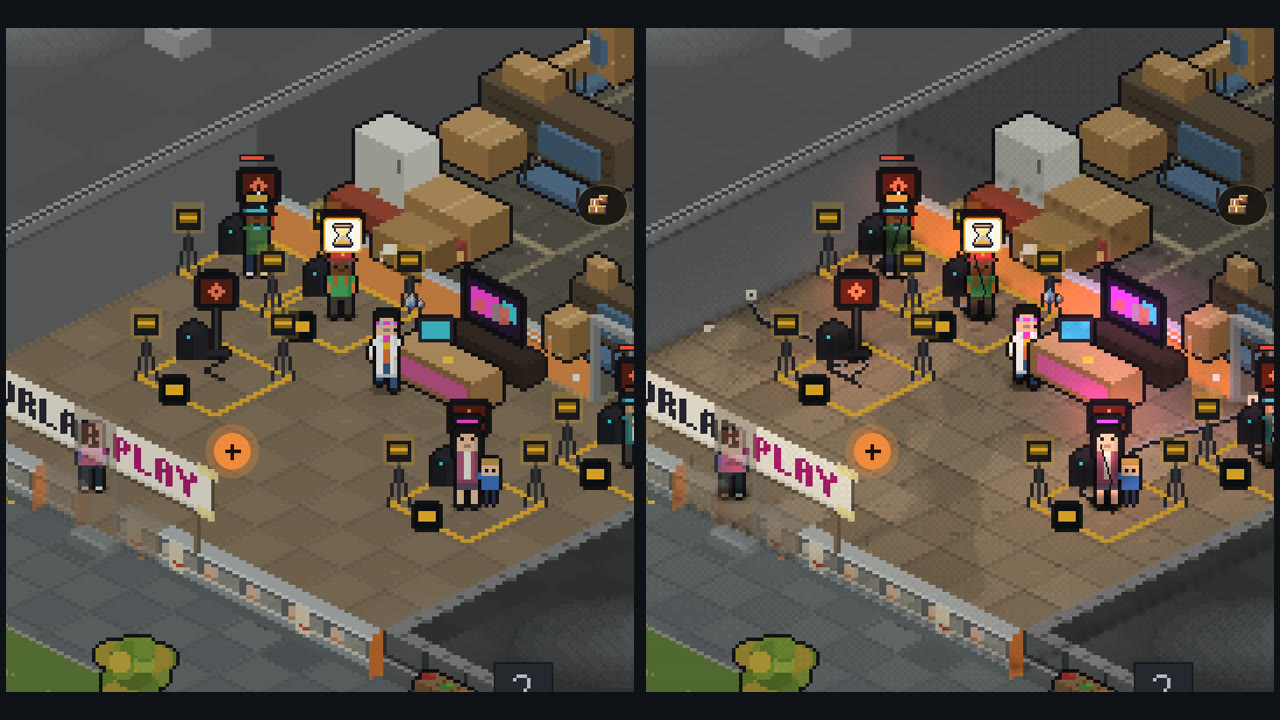
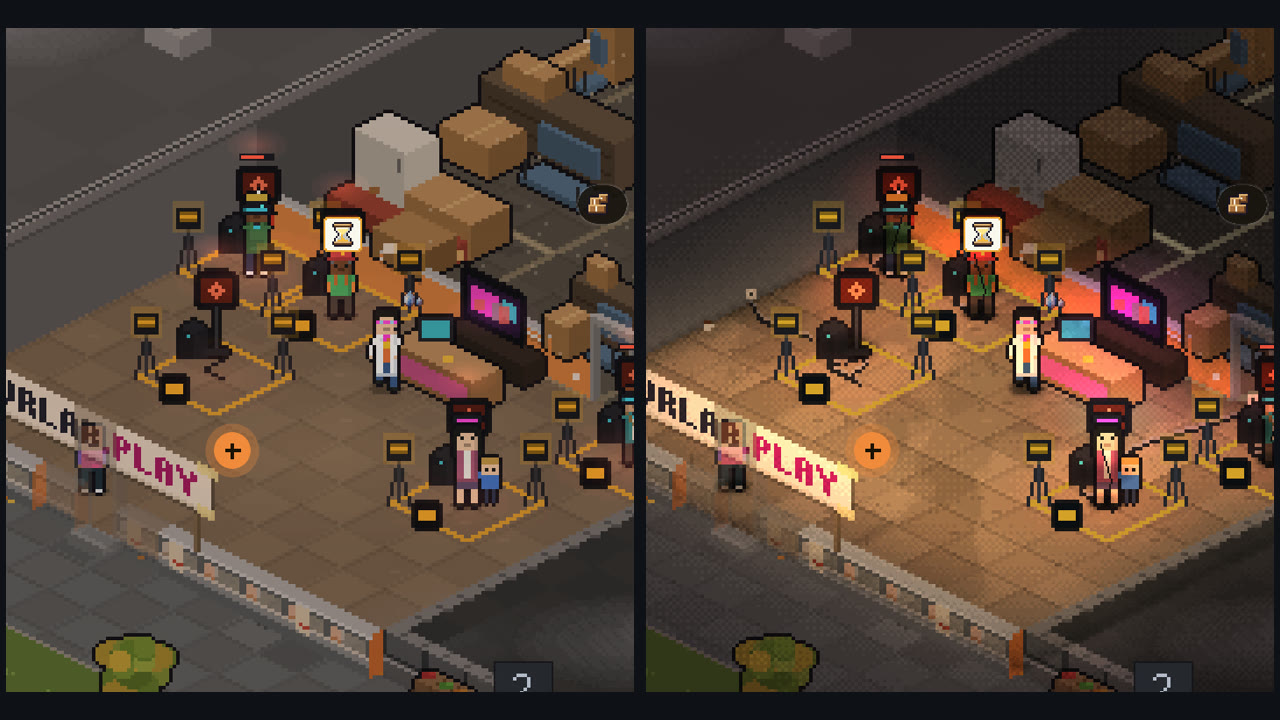
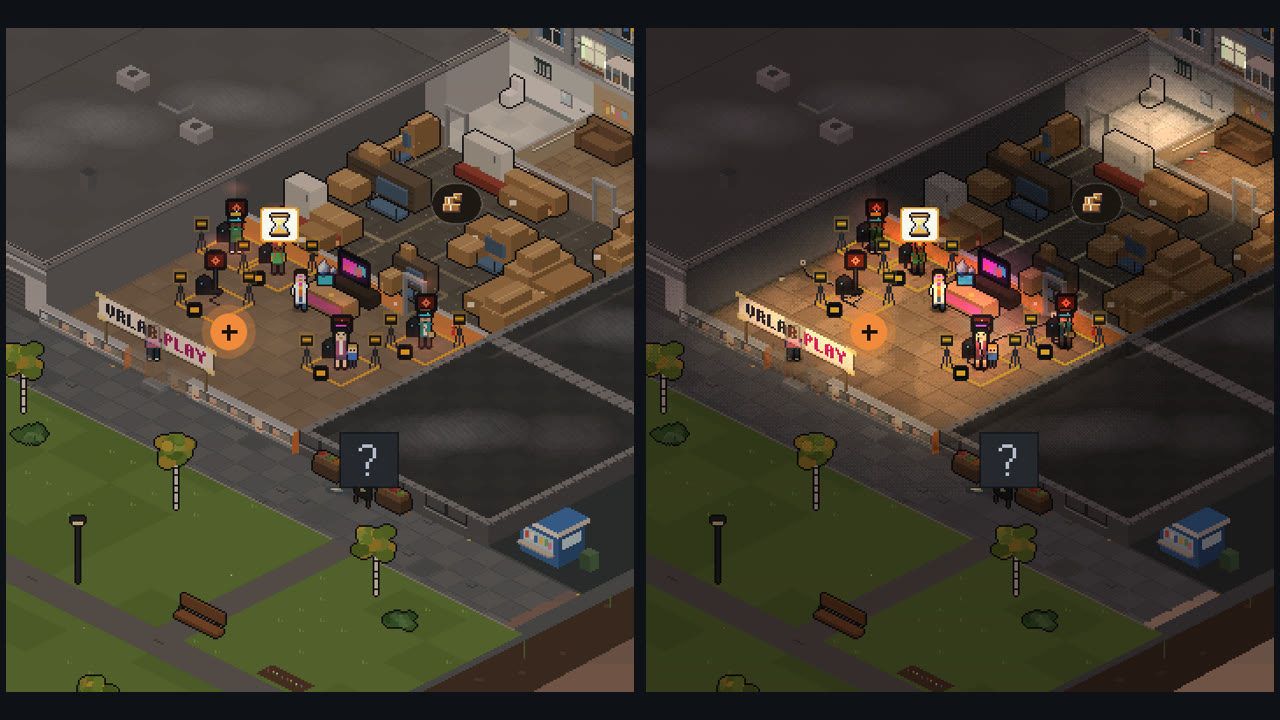
The pixel art in this game is drawn by code, and until this build it was drawn clean: every floor tile new, every wall lit the same, like a picture of a shop nobody has opened yet. The real lab in 2016 was the ground floor of a panel block, with worn linoleum, cables everywhere and boxes in the corners.
So the hall got a light pass and some wear: warm light inside and a dark street around it at dusk, floors and walls that show their age, cables from the stations, clutter where people work. The pictures below are the same frames before and after. If a phone struggles with it, a Lights setting turns it down or off.
What is next
Being built now and not in the browser build yet: the working day. Guests walk up to a counter, register and pay, play, leave a review at a table by the door and go home. At closing time there is a last call, the staff clean up and turn the lights off, and in the morning a couple of them are already chatting outside before the doors open. The people are getting bigger and more detailed too.
If something in the new build feels wrong, tell us: contact@goldenharbourgames.com or the comments on the itch page.