On Tuesday 17 November we put a small tycoon game called VRLABDV Story on itch.io. By that evening it had a different name. It is now VR Arcade Story, and the old address forwards to the new one.
Why the name went
VRLABDV was the name of the real lab: VR Lab, Vladivostok. It means a lot to the one of us who ran it, and nothing to anybody else. His own verdict on it as the title of a game: "not sellable".
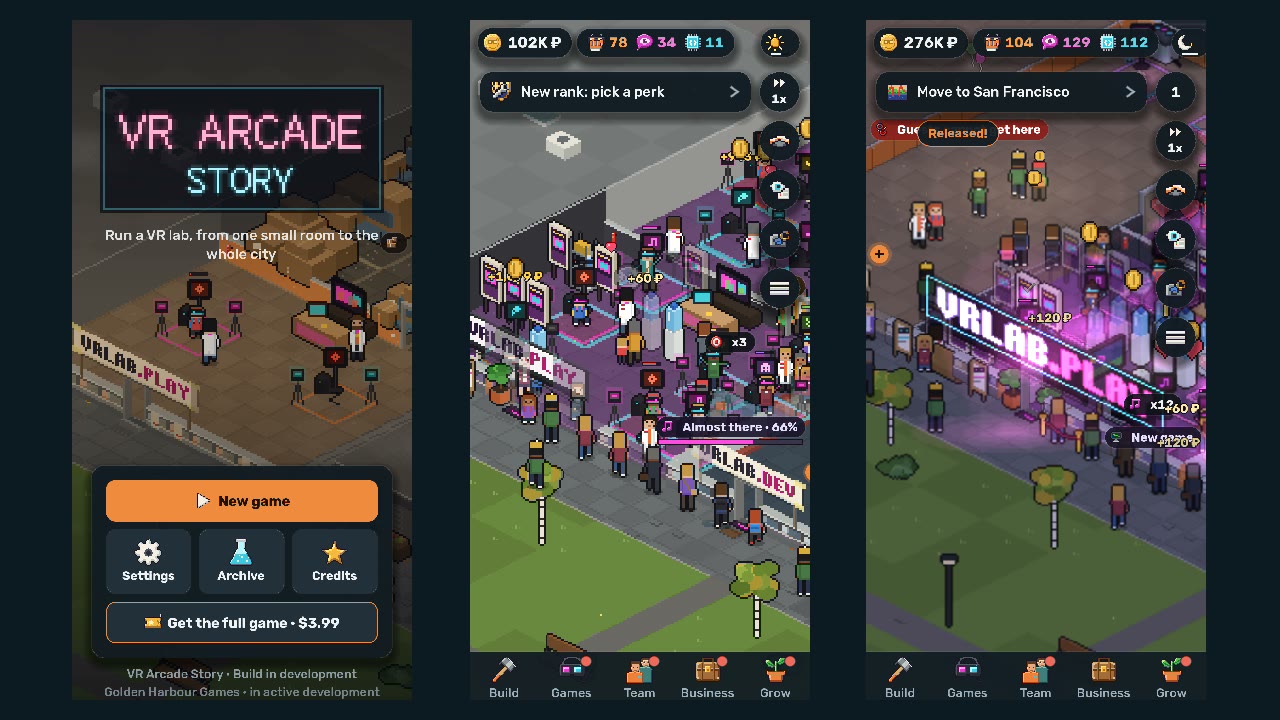
VR Arcade Story says what is inside. You run a VR arcade, and it is a tycoon game of the "story" kind, where a small business grows room by room. The lab keeps its name where it belongs, on the neon sign over the door: VRLAB.PLAY.
What build 28 added
- A main menu. Three save slots with a picture of each lab, settings, credits, and an archive of everything you have found across all your saves.
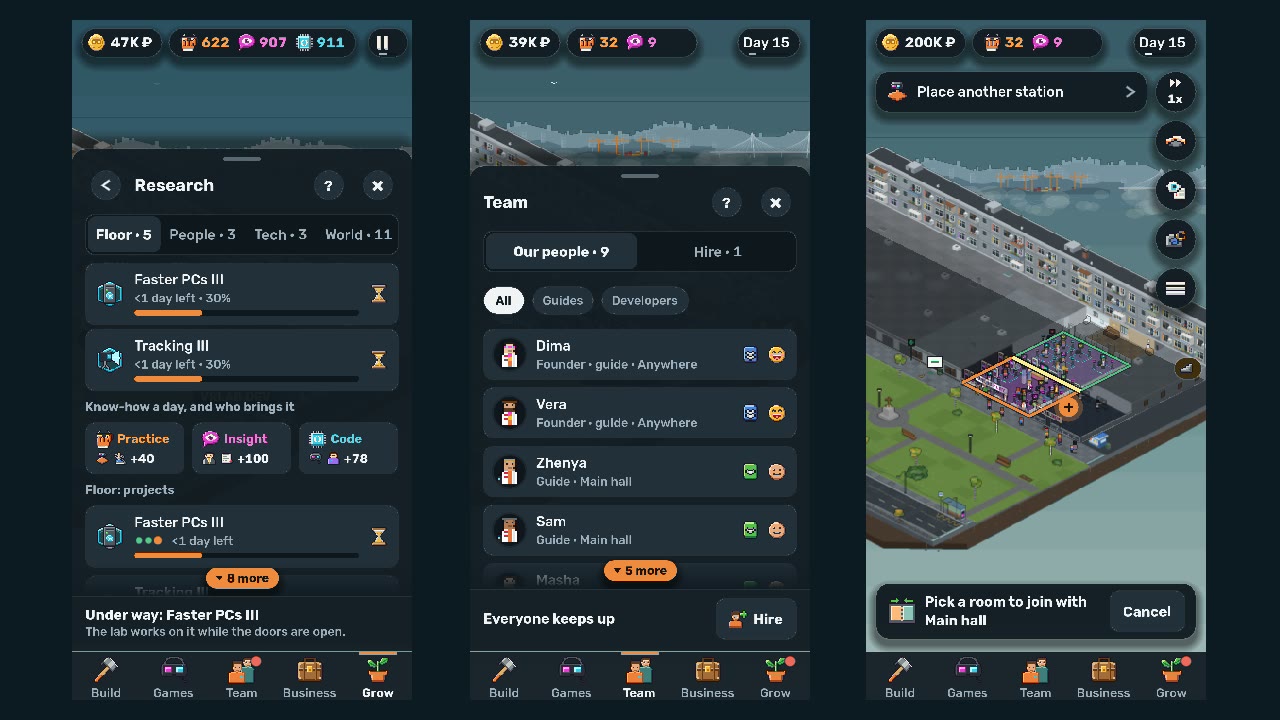
- Research in three kinds of know-how. Practice comes from running sessions, insight from deals and discoveries, code from shipping things. You spend it on a board of more than a hundred projects, so who you hire decides where the lab gets better.
- Rooms that join. The shop next door is now the standard size of a room. Rooms with the same job join into bigger ones, split again or swap places, and each change takes a day of building work that you can watch.
- A speed button. Half speed, normal or double. It replaced a zoom button nobody needed, because a pinch or a double tap already zooms.
- Buttons that keep their taps. In the build before, a tap on the round buttons at the right also landed on the hall behind them. It no longer does.
The free part and the full game
The build in the browser is the free part. It ends when your first lab is on its feet: the back room cleared, the first person hired, the shop next door taken, a coworking or a studio running and a first discovery made. After that the lab keeps running and you can keep playing it, but the story stops there.
The full game is coming to phones as a single purchase, with no ads and no timers. The button for it in the browser build cannot sell you anything yet. We would rather say that plainly now than surprise anyone later.
What is next
Act two: San Francisco in 2020, with free-roam arenas. You drag an arena out to the size you want, and its size decides how many people fit. Each one needs a rack of wearable kits at the entrance and marshals on the floor. It is being built now and is not in the public build yet.
The first notes on build 28 are already in. Rooms are too hard to tap, because a station always wins the tap. A pharmacy joined to the hall kept the wall between them. The wide layout squashes its panels. All three are being fixed. If you find a fourth, tell us: contact@goldenharbourgames.com or the comments on the itch page.