Punch League is a card game about boxing: you pick a punch, he picks a punch, the fighters play it out. It is live on Google Play, the App Store, RuStore and itch.io, and it stays there and keeps getting fixes.
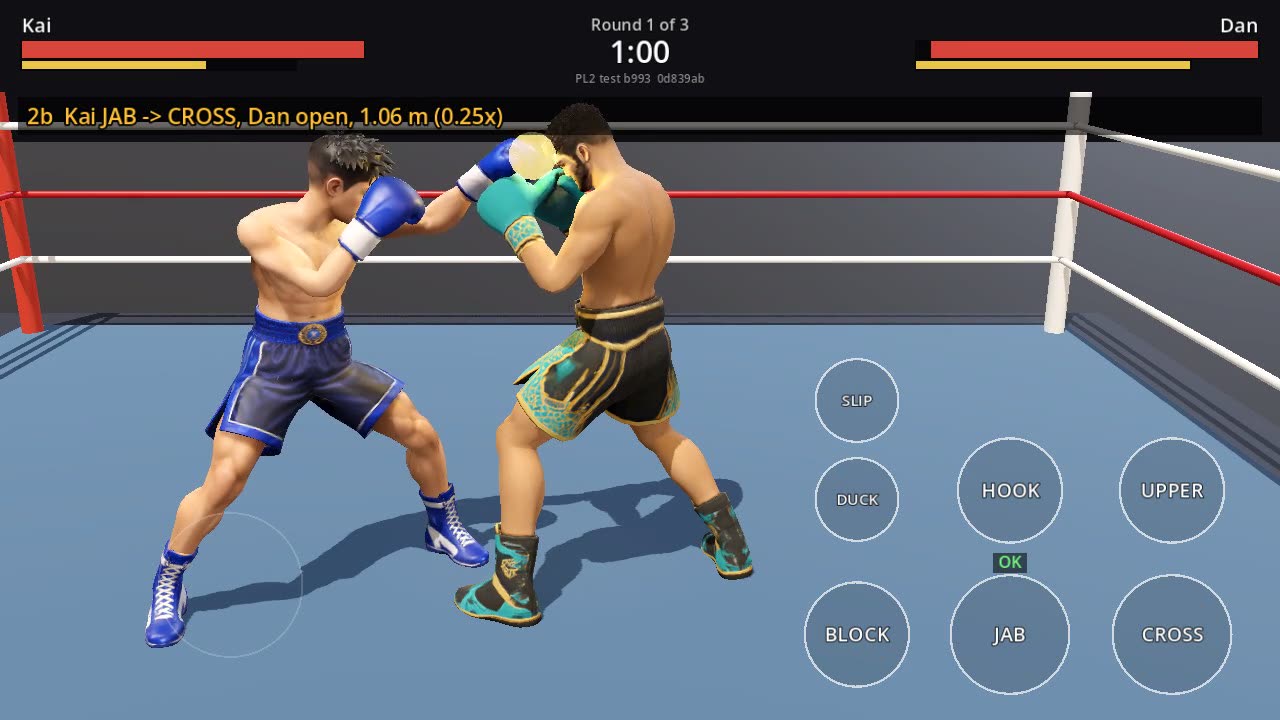
Punch League 2 is a different game with a different minute of play. You move the boxer yourself, in real time, in a ring you can circle. Distance decides everything. A punch commits you. Throwing too many leaves you with nothing. Moving your head makes the other man miss. A hurt fighter goes down. We are building it with Pasha, a friend of the studio who made the first 3D prototype, and it has two fighters so far: Kai and Dan.
It is not out. This is a report from the workshop.
The prototype that passed every test
The first 3D version put two modelled boxers inside the card game’s screen. It had a hundred and fifty commits in three days and a test suite that was green on every one. And every time the build went on a phone, the verdict was the same: punches look short, the attacker drifts backwards, the feet overlap.
So we stopped tuning and measured. Three things came out.
- They stood too close. The card game placed its fighters about 0.9 metres apart, because cards do not need room. That is clinch distance. A jab thrown from there cannot straighten: the elbow was bent to about 100 degrees in the game against 168 in the animation it came from.
- A hit was a timer. A slip dodged a punch because a rule said the timing was right, not because the head had left the glove’s path. That is why defence never looked like defence.
- The test measured the wrong thing. It checked that one point came within 12 centimetres of another. It passed on every build the phone rejected.
The honest reading was that the prototype had done its job. It proved the controls and the rules. The picture needed a real 3D scene under it, so we started that part again.
What is built
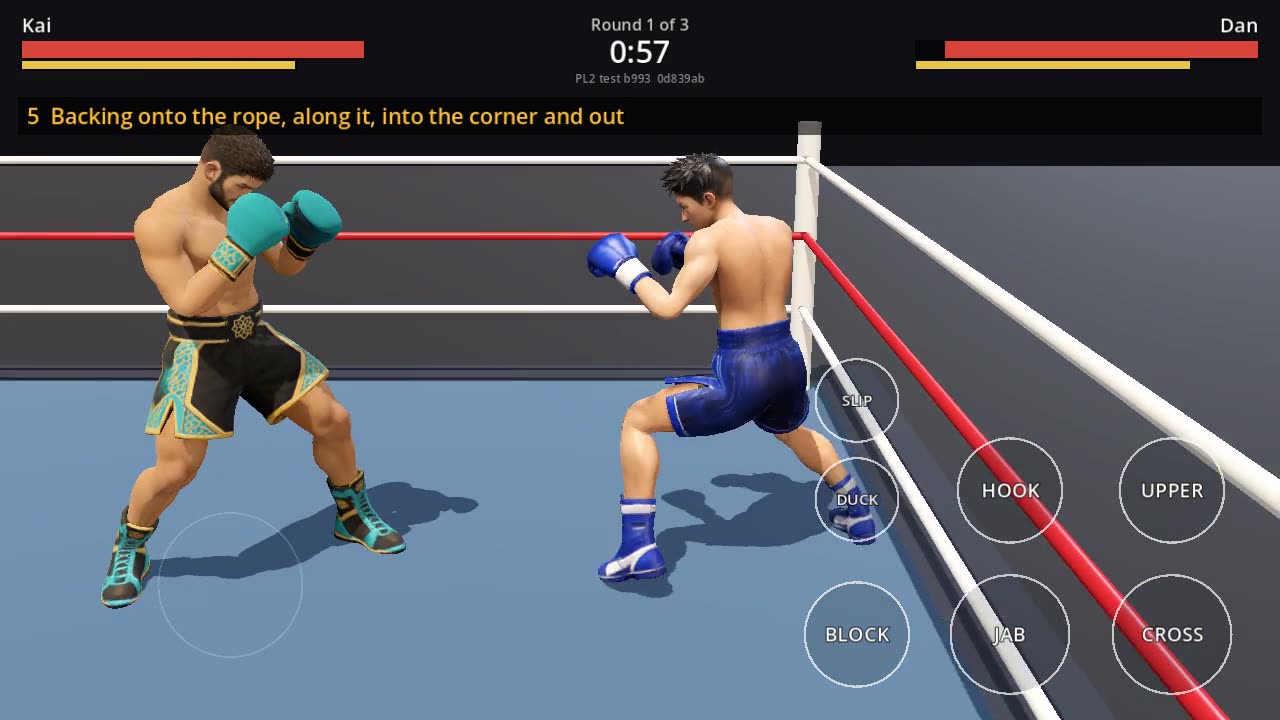
- Two bodies in a room. A real ring measured in metres. Straight punches work at about a metre between the hips, hooks and uppercuts at about 0.8. The arms now reach full length.
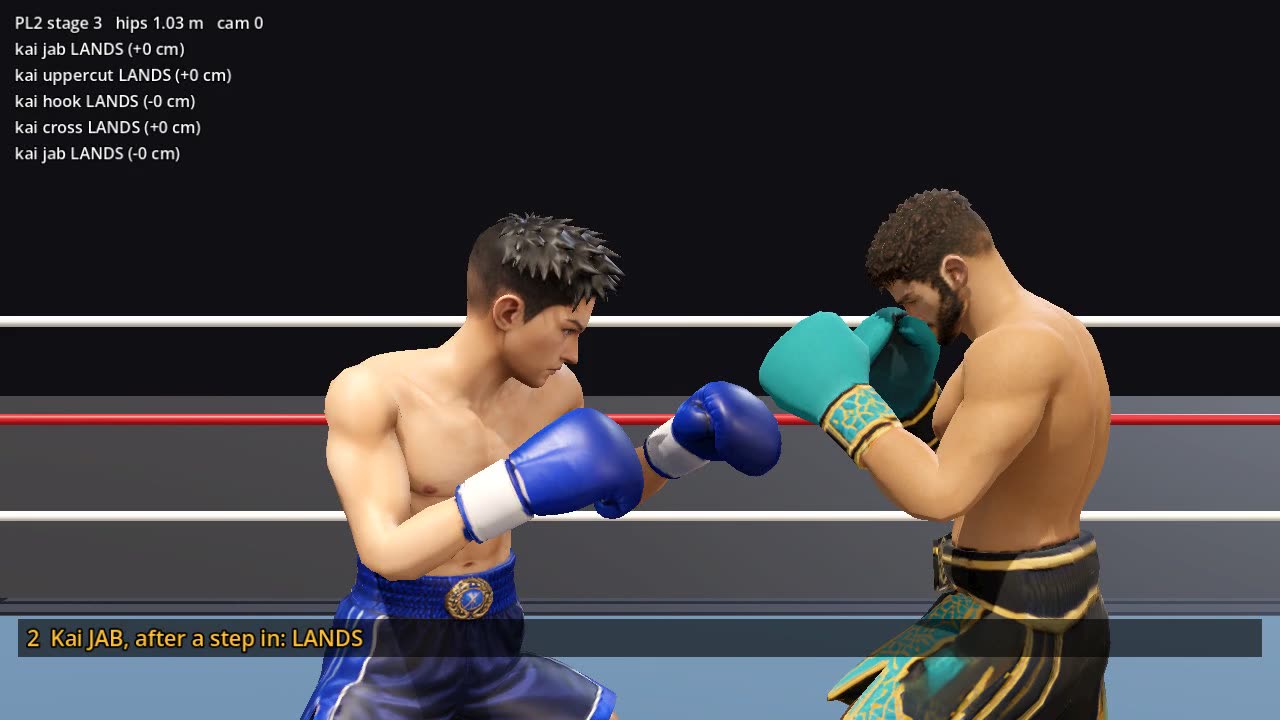
- Contact. A punch is committed the moment it is thrown. A block works when the gloves are in the punch’s path, and a slip works when the head is not. The glove you see stops on the face or the guard where the rules say it did, to within a centimetre.
- The ring. The fighters circle each other, the camera turns with them, and the ropes give, spring back and trap a man in the corner.
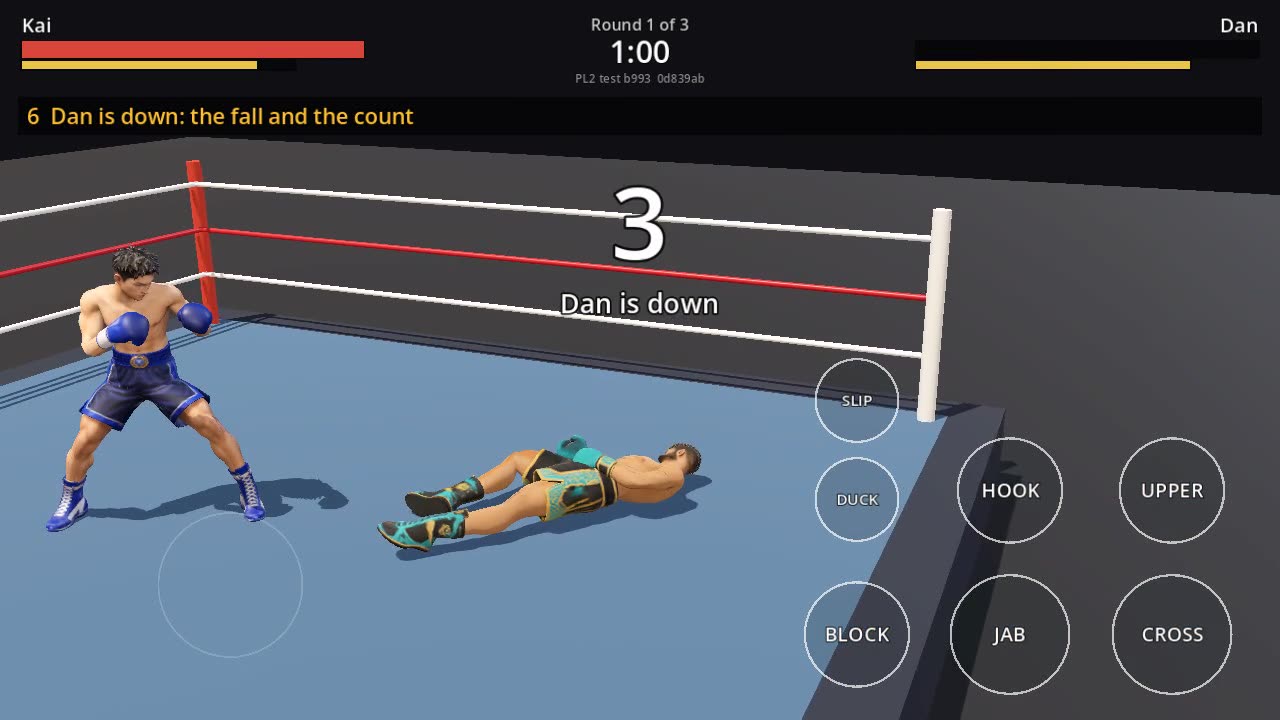
- One fight. Three one-minute rounds, a knockdown with a count and a get-up you have to tap for, and a decision on the cards if both are standing. Dan can fight three ways: pressing, countering or boxing at range.
How we judge motion
Numbers lie about animation and so does a video at full speed. What works is a filmstrip: every frame of one punch laid side by side on a sheet, from a fixed camera. A pop of one frame is invisible in motion and obvious on the sheet.
That is how we found the worst bug so far. A second jab thrown straight after the first made the arms jump from the return pose to the guard in a single frame. The cause was dull: one animation slot being restarted while it was still fading out. The fix was two slots used in turn. The jerk on the glove went from 16 units to 5, where a single clean jab measures 3.
For the hook and the uppercut we put our frames next to frames of a boxing coach teaching the same punches. The hook’s elbow now rises with the fist instead of trailing under it. The uppercut dips six centimetres and drives up from the legs. The turn of the hips in the hook is still wrong, and that one has to be redone in the animation itself.
Letting the machines fight
Before a person plays a rule change, two computer fighters play it eighteen times. The first set of numbers ended every fight in round one, so damage came down. The next set had the opposite problem: nobody ever went down. After punches were made cheaper to throw and a miss less costly, the same eighteen fights gave four knockouts instead of none and forty knockdowns instead of five, and the fighters spent less than half as long too tired to jab.
What is not right yet
- Kai beats Dan fifteen fights to three when the computer plays both. His jab is longer and the rules have no answer to that yet.
- The hook needs its hip turn, and the hand takes too long to come back across the face.
- There are two fighters, one ring and no game around the fight: no career, no opponents to climb through.
- The newest build has not had its verdict on a phone. Everything above is from recordings and checks, and the phone has overruled those before.
There is nothing to download yet and we are not going to name a date. When there is a round worth replaying, it goes on this site first, free in the browser like everything else. Until then, Punch League the card game is right here, and if you box, or just know what a good boxing game feels like, we would like to hear what we should not get wrong.