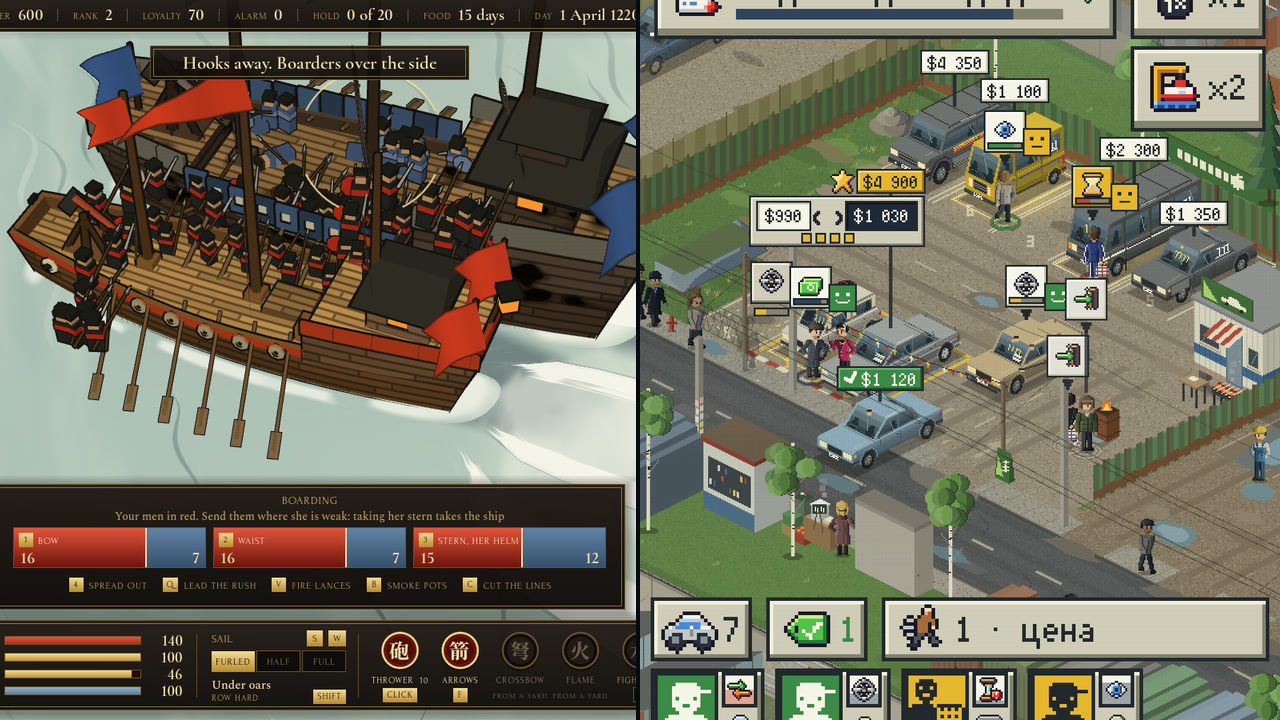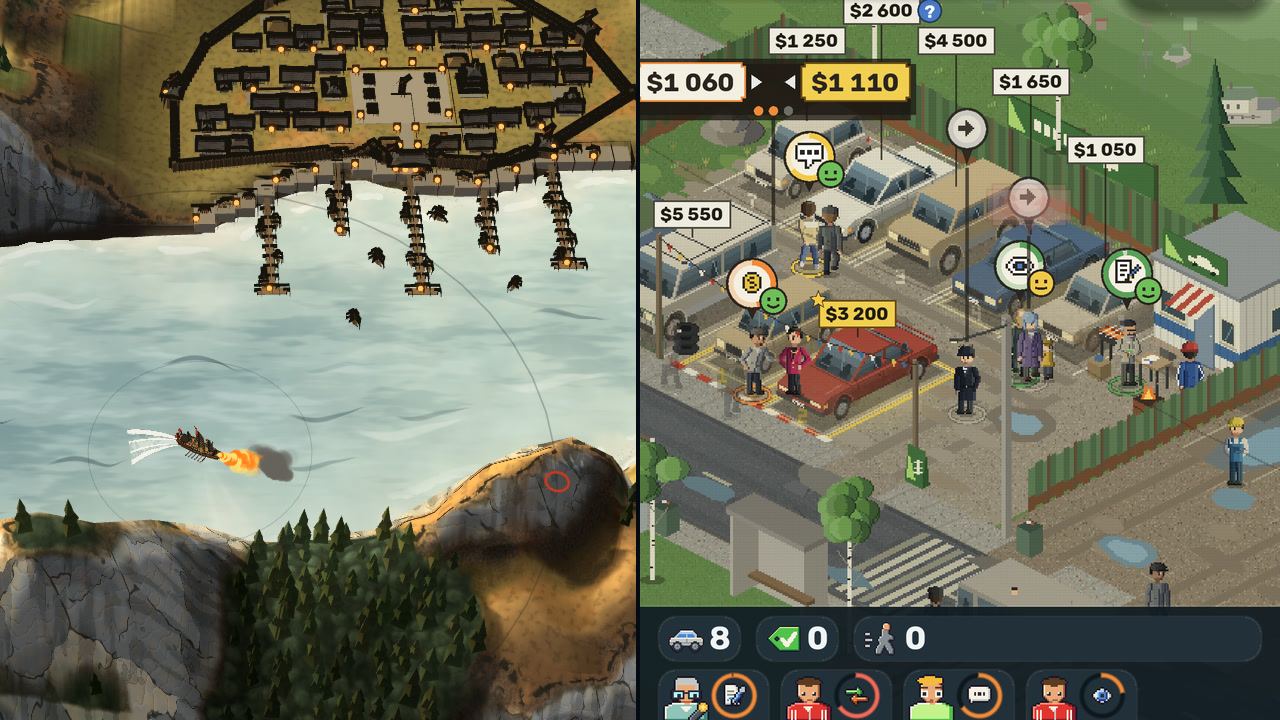
What was wrong. Fires used to start almost on top of the town. By the time you had a look around, it was already in the back yards, and the only thing that made sense was to paint blue on the flames and hope. And painting blue barely mattered. The helicopters dropped water where you painted, the fire went out in one spot and kept running in the next, and a fire you fought well and a fire you mostly watched ended in much the same place. People told us they couldn't see what they were supposed to be doing, and they were right.
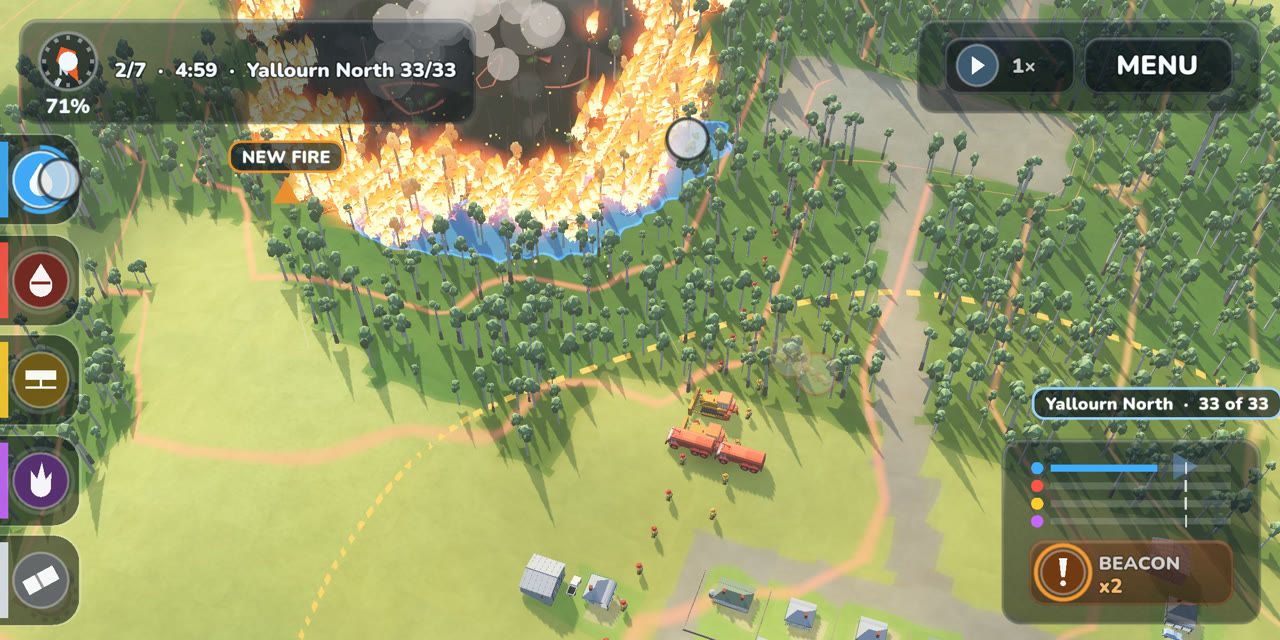
What it is now. Every fire starts further out, in the country, and runs at the town. You have a few minutes, and one real decision: where to stop it.
- Water still cools the fire's sides, but it never stops the head. Only a line does.
- You draw the line across the fire's path, from barrier to barrier: a road, a river, rock, ground that has already burned. Tankers coat it with retardant, dozers scrape it to bare earth.
- Each end of the line is either tied to a barrier (a green dot) or loose (a broken red ring). The fire walks round a loose end.
- The line shows whether your fleet can build it before the fire gets there: green, in time; amber, close; red, too late. You see that while you are still drawing, so you can move the line back toward the town and give your crews more time.
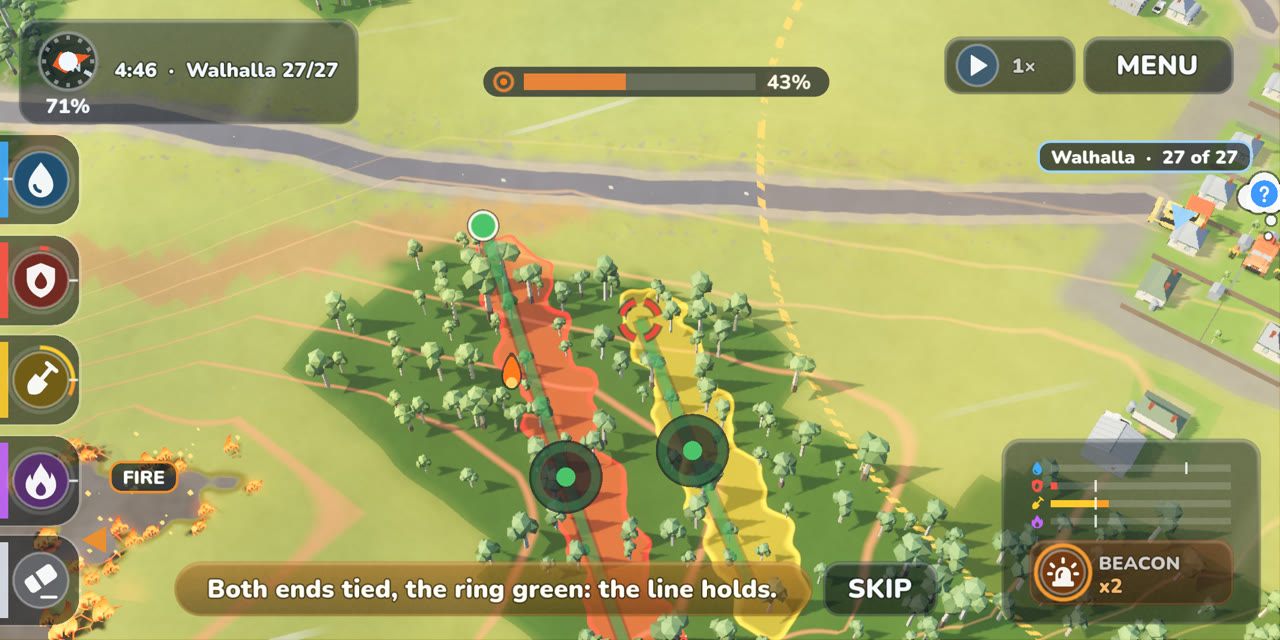
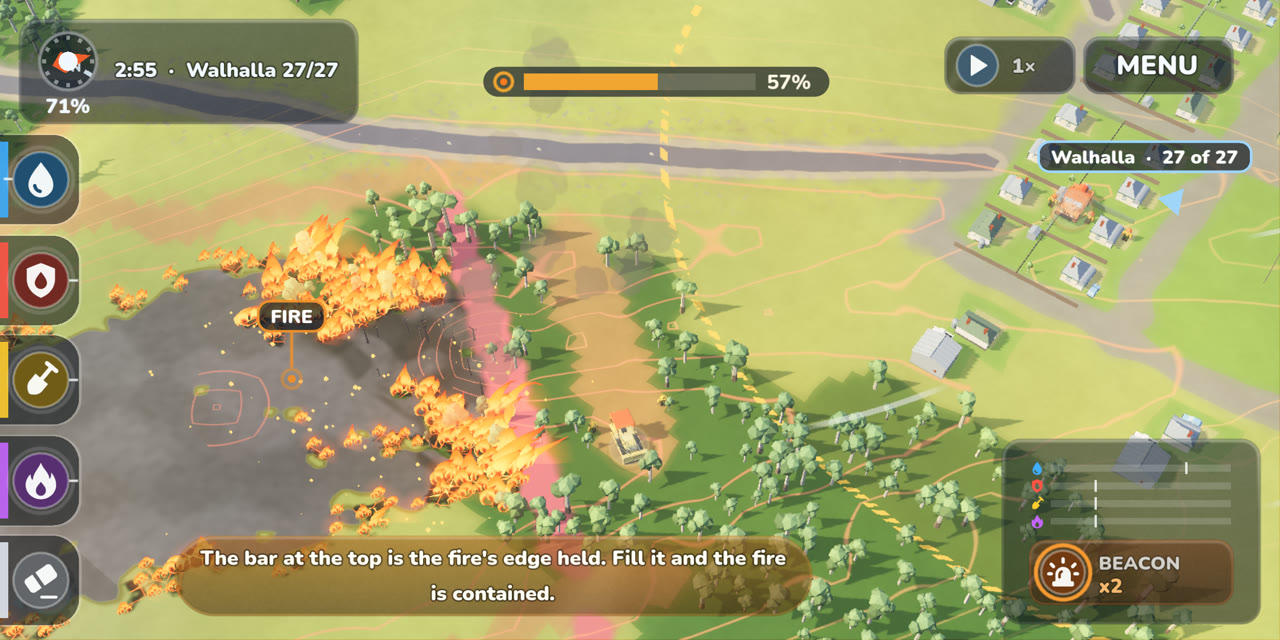
- The bar at the top is how much of the fire's edge is held. Hold the head with a tied line and your fleet goes on to work the open sides by itself. Fill the bar and the fire is CONTAINED.
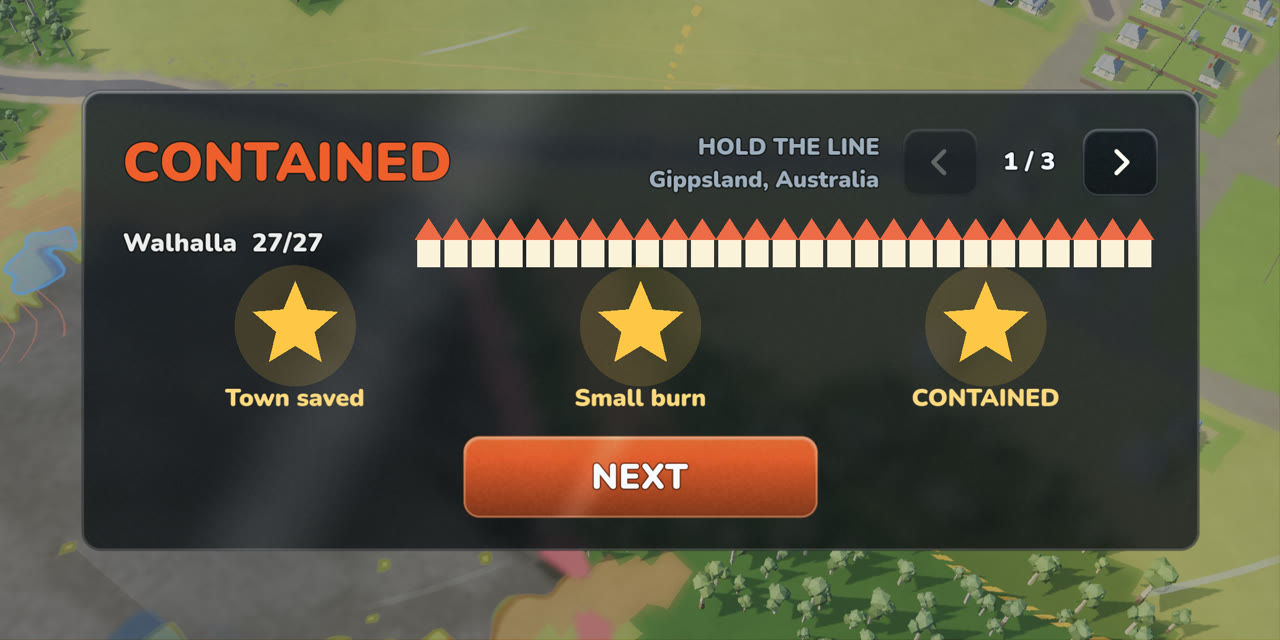
Stars. Town saved, small burn, contained. The third star used to be "out in time", which mostly meant luck. Now it means you read the fire right. You still never lose a fire or a season: a rough one just pays fewer cards.
The first fire teaches it. Three steps: the fire and where it is heading, the dashed line to draw, and what a tied, green line looks like. Then it is yours.
We tested it with a bot that plays well, one that only throws water at the head, one that draws a line with loose ends, and one that does nothing, over 192 fires. The good player now gets clearly more stars than the other three (2.65 against about 1.9) and contains most of its fires; the others almost never do. Before this change the gap was small enough that it didn't matter what you did.
What's next
- Spot fires. Embers carried ahead of the front, starting new fires past your line. From the fifth level of a season.
- Wind turns. The wind changes during a fire, so a line that was right at the start may need a second one. Also from level five.
- The Spotter card gets better, so you have a real answer to spot fires.
- Graphics modes, so slower phones run smoothly and faster ones look better.
Tell us where you drew your first line and whether the colours made sense. That is the part we most want to get right.